
Interior Design
Small Living Room Layout Tricks That Work
RitZi Stagings · 24 September 2026
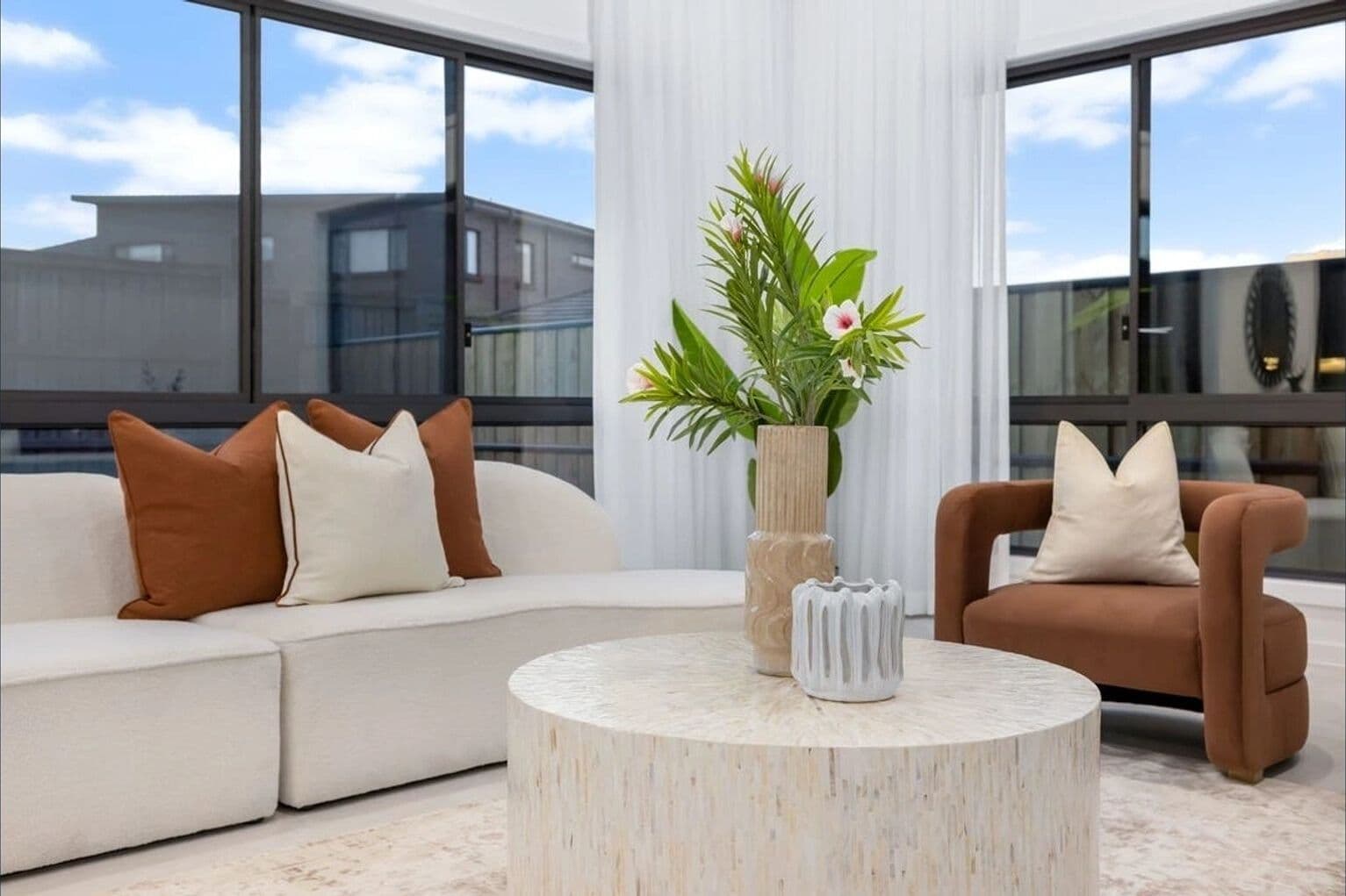
A small living room can be one of the trickiest rooms to stage for sale. Buyers walk in, take one look, and start mentally measuring whether their couch will fit — and if the room feels cramped, that doubt can follow them through the rest of the inspection.
The good news is that square metreage isn't the only thing that determines how spacious a room feels. Layout, sightlines, and furniture choices do a lot of the heavy lifting. Here's how we approach small living rooms when we're preparing a property for sale.
Start With Flow, Not Furniture
Before you even think about what pieces go where, walk the room and identify the natural traffic path — the route someone would take from the doorway to the seating area, and on to the next room. This path needs to stay clear.
A common mistake is placing furniture to fill space rather than to support movement. If a buyer has to angle their body around a coffee table or squeeze past an armchair, the room reads as tight, even if it technically isn't.
A few flow-friendly habits:
- Keep at least 60–70cm of clearance in main walkways.
- Avoid placing large pieces directly in sightlines from the entry.
- Angle furniture slightly away from doorways rather than facing it head-on, which softens the sense of confinement.
Choose Fewer, Smaller-Scale Pieces
It's tempting to think a small room needs small furniture to match — and that's partly true, but the bigger issue is usually quantity. A room with one well-proportioned sofa, one accent chair, and a slim coffee table will always feel more open than one crammed with a three-seater, two armchairs, a side table, and an ottoman.
For staging purposes, we generally recommend:
- One sofa (two or three-seater, depending on the room) rather than a full lounge suite.
- A single accent chair instead of a matching pair.
- A coffee table with visible legs rather than a bulky solid base — it reads as lighter and less obstructive.
- Storage that doubles as seating or display, so the room doesn't need extra pieces to feel functional.
Scale matters too. Oversized furniture in a small room doesn't just take up floor space — it dominates the eyeline and makes the ceiling feel lower. Choosing pieces with a slightly smaller footprint gives the room room to breathe.
Float Furniture Off the Walls (Sometimes)
There's a persistent myth that pushing all furniture against the walls is the best way to maximise space in a small room. In practice, this often creates a "dead zone" in the centre and forces conversation pieces too far apart to look intentional.
Instead, try floating the sofa slightly away from the wall and using a rug to anchor the seating area. This creates a defined zone within the room rather than one large, awkward void — and it tends to photograph better too, since it gives the space a sense of depth rather than a flat, edge-to-edge layout.
This won't work in every layout, especially very narrow rooms, so it's worth testing with tape on the floor before committing to a full furniture rearrange.
Use Sightlines and Mirrors to Extend the Room
What a buyer sees from the doorway sets the tone for how they perceive the whole room. If the first thing they notice is a wall or the back of a chair, the room feels boxed in. If their eye is drawn toward a window, a piece of art, or a light source, the room feels like it extends further than it does.
Mirrors are a genuinely useful tool here — not just as decoration, but as a way to bounce light and visually double a sightline. Positioned opposite a window or light source, a well-placed mirror can make a modest living room feel noticeably more open in photos and in person.
Let Light and Colour Do Some of the Work
Dark, heavy tones can make a small room feel enclosed, while a lighter palette on walls, curtains, and larger furniture pieces helps surfaces recede rather than close in. This doesn't mean every small living room needs to be white — but keeping large surfaces relatively light, and reserving bolder colour for cushions, art, or a single accent piece, tends to keep the room feeling open rather than heavy.
Sheer or simple window treatments that don't block natural light also make a real difference, especially in listing photos where light is one of the first things buyers notice.
Bringing It Together
None of these tricks require a renovation — they're about working with the room you have, not against it. For a home about to hit the market, that's exactly the point: small changes in layout and furniture choice can shift how a room feels within a single afternoon.
If you're preparing a property for sale and want a second set of eyes on your living room layout, we'd be glad to help.
Ready to style your next listing?
Get a free, no-obligation quote from RitZi Stagings.
Get a Free Quote